PÓLÓMŰVEK KNOWLEDGE BASE
DTG vs DTF T-shirt printing: which should you choose?
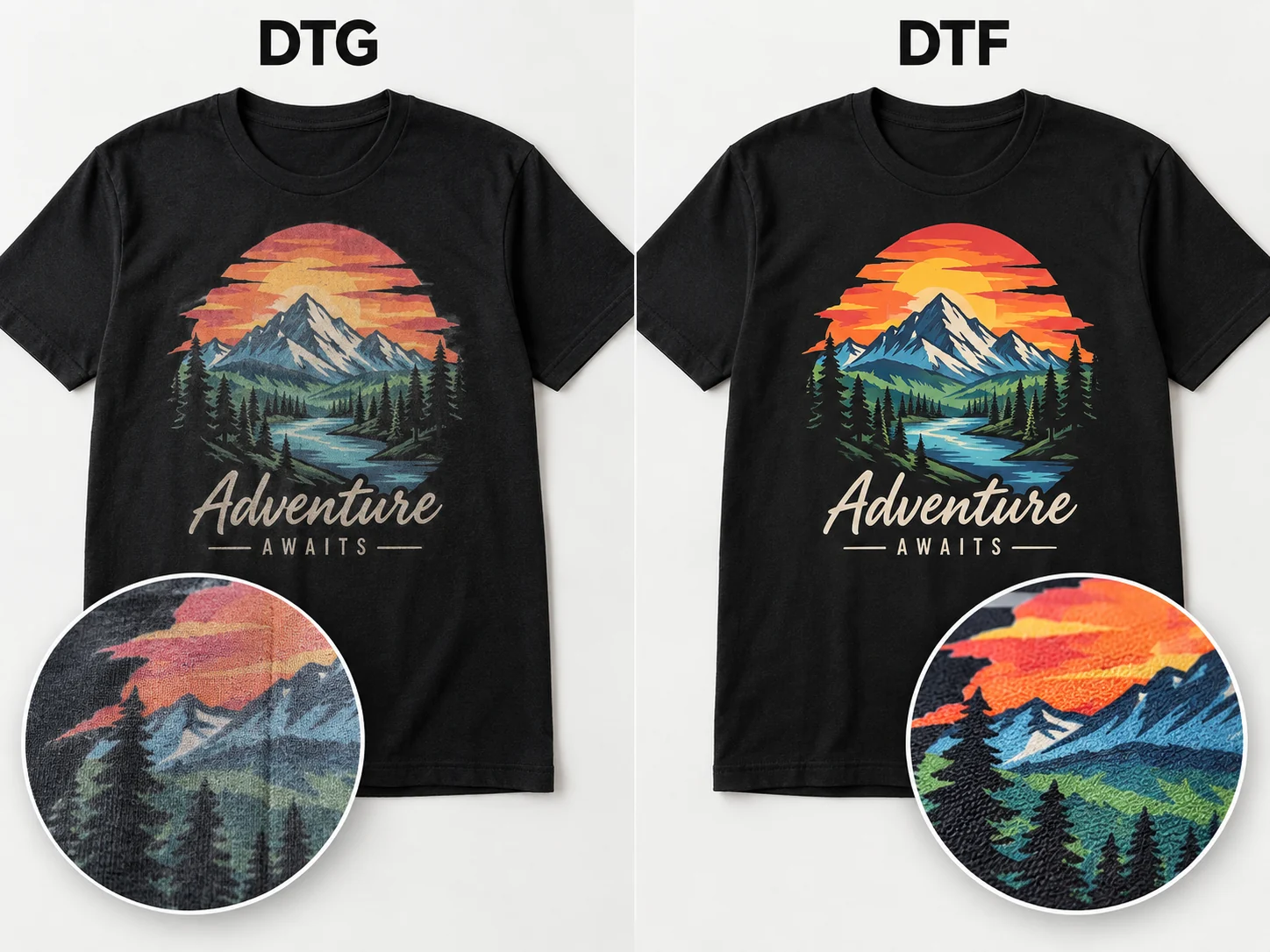
DTG and DTF can both produce detailed, full-colour custom T-shirts, but they behave differently on fabric. The right choice depends on the garment, artwork, quantity and the finish you want.
What is DTG printing?
DTG (direct-to-garment) prints water-based ink directly into the textile. It is particularly well suited to cotton garments and detailed, photographic or multi-colour artwork. The result usually feels soft because much of the print becomes part of the fabric surface.
What is DTF printing?
DTF prints the artwork onto a transfer film first, then applies it to the garment with adhesive and heat. It is versatile across many garment types and can produce vivid colours and sharp details, including on dark fabrics.
Which feels softer?
On suitable cotton garments, DTG often has the softer hand feel, especially on lighter shirts. DTF creates a more distinct printed layer on top of the fabric. Whether that matters depends on the size and density of the artwork.
Which method is more durable?
Both methods can be durable when production settings are correct and the shirt is washed properly. Longevity depends on pretreatment, curing or pressing, ink and film quality, garment material and washing habits—not only on the technology name.
How should you choose?
For cotton shirts and large, photo-like designs, DTG is often a strong option. For mixed fabrics, small logos, vivid transfer-style graphics or jobs where versatility matters, DTF can be preferable. The artwork and garment should be evaluated together.
Related guides
Design your T-shirt on Alkossegyedit.hu
Product selection, design, checkout and payment take place in the Alkossegyedit.hu webshop.